The Rocks Adaptive Reuse
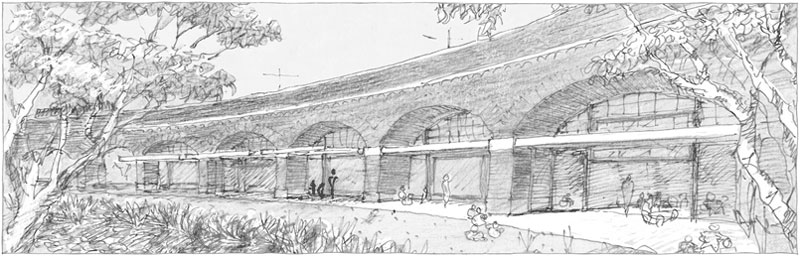
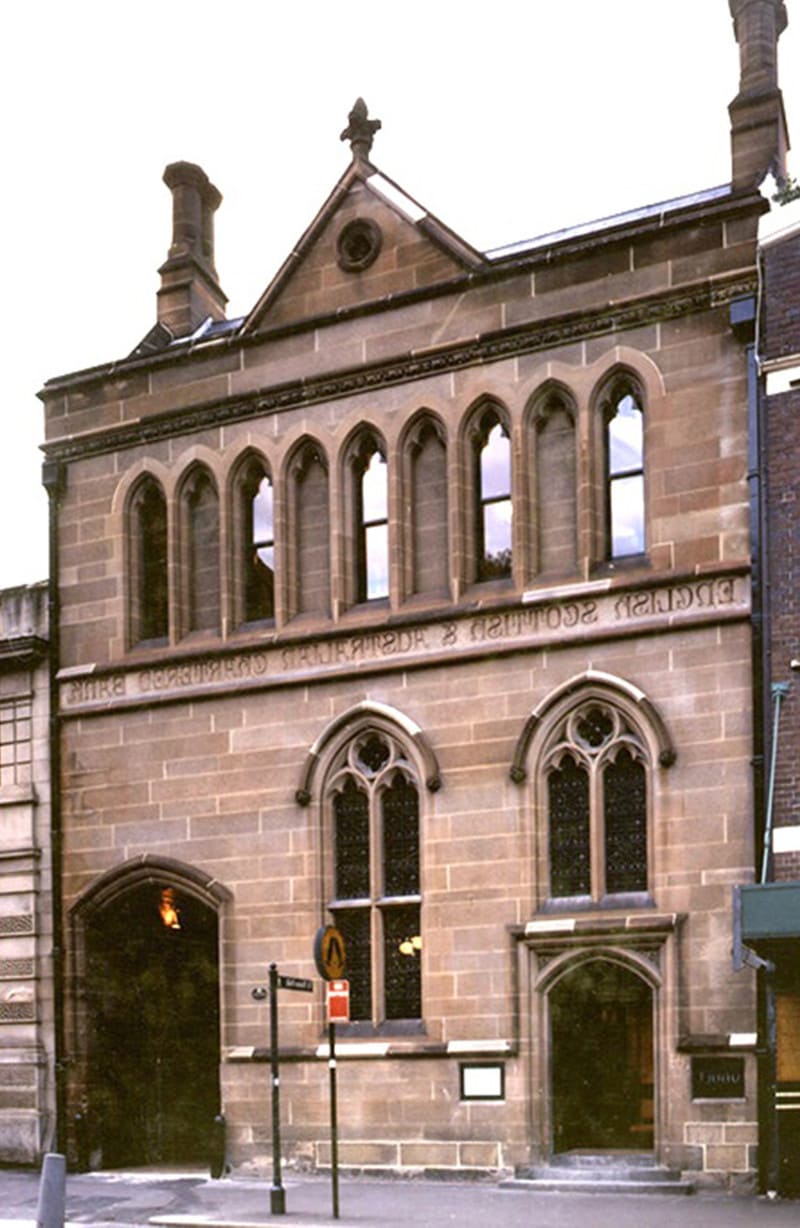
The George Street North Branch of the English Scottish and Australian Chartered Bank was designed in Venetian Gothic style by William Wardell and completed in 1885. It is considered to be a ‘gem’ of non-ecclesiastical Gothic revival architecture in Australia.
The oversized 1930s rear section and other accretions were recorded and removed. An ice cube like glass ‘conservatory’ housing three floors of dining was added while the Wardell building was returned to a state which enabled its period features to be readily appreciated. The light filled elegance of the contemporary section is a foil for the pierced solidity of Wardell’s Gothic volumes.
At the rear, the glass addition addresses the pedestrian precinct of Nurses Walk. Surgeon’s Court is a former carriageway through the old bank and now provides pedestrian access to Nurses’s Walk. These pedestrian walkways form part of a series of pedestrian laneways and courtyards which contribute to the adaptive reuse of the fine grained urban character of The Rocks. The new glass addition opens out to courtyard seating under a large Plane tree in the former rear yard of the Bank which was carefully retained to provide a leafy ambience to the new dining areas.
The restaurant functions have been organised to maximise the ‘grand qualities’ of the original banking chamber and upper level with strong visual connections through to the new ‘conservatory’ revealing the rear leafy courtyard. The strong room takes on new life as the wine store and servery for the restaurant.
Location: The Rocks, Sydney, NSW
Design Architect: Luigi Rosselli
Project Architect: Milenko Mijuskovic & Kate Mountstephens (SCA)
Interiors: Luigi Rosselli
Structural Consultant: Birzulis Associates
Electrical Consultant: Shelmerdine & Partners
Mechanical Consultant: Shelmerdine & Partners
Hydraulic Consultant: Acor Consultants
Acoustic Consultant: Renzo Tonin & Associates
Quantity Surveyor: Widnell
Conservation Consultant: Robyn Riddett
Builder: A & DR Illes & Built (fit out)
Photography: Ross Honeysett

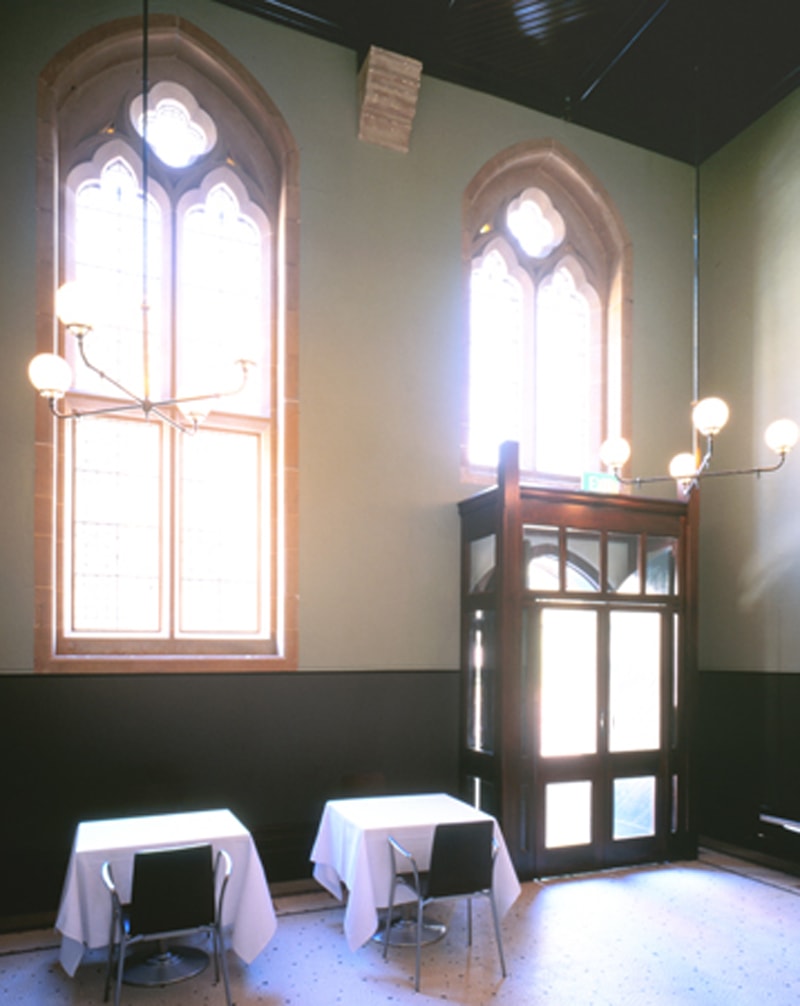
A dining area set within a restored Gothic interior, defined by tall pointed-arch windows that filter soft daylight into the space. Small tables with white lines sit beneath contemporary pendant lights, contrasting with the dark wall panelling and ornate timber-framed doorway. The composition highlights the verticality and refined detailing of the original architecture against a restrained modern.
© Ross Honeysett
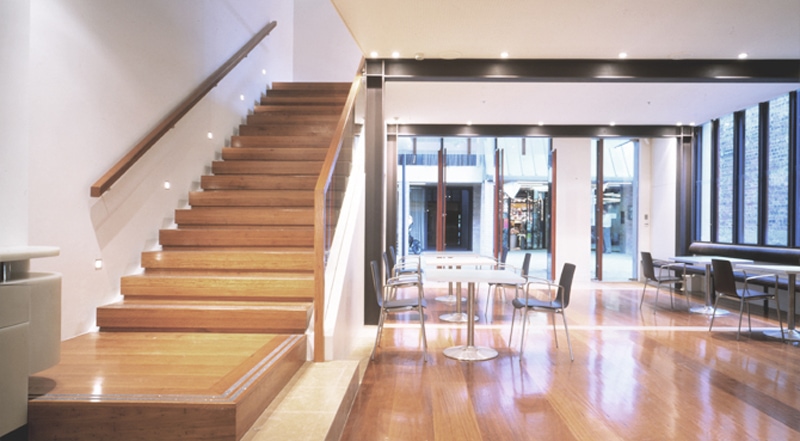
A warm timber stair and polished floorboards anchor this bright interior, where a simple dining area opens toward a glass-lined rear extension. The contrast between the solid historic structure and the lighter contemporary addition creates a spacious, refined setting.
© Ross Honeysett
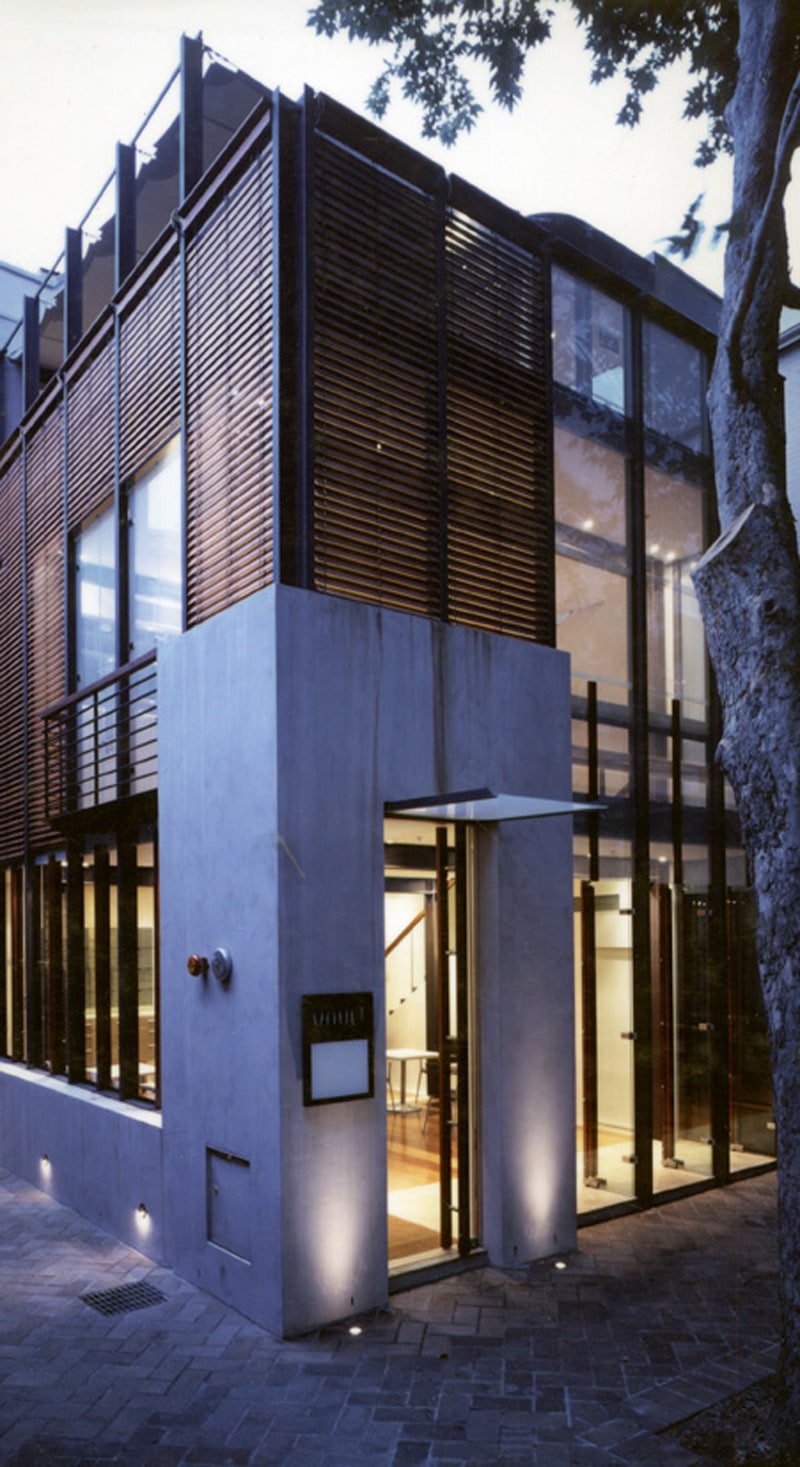
A glazed contemporary corner rises behind a solid base, combining timber screening with tall glass panels to create a light-filled street presence. The compact form feels distinct from the historic fabric, yet it sits neatly within the surrounding laneway setting.
© Ross Honeysett
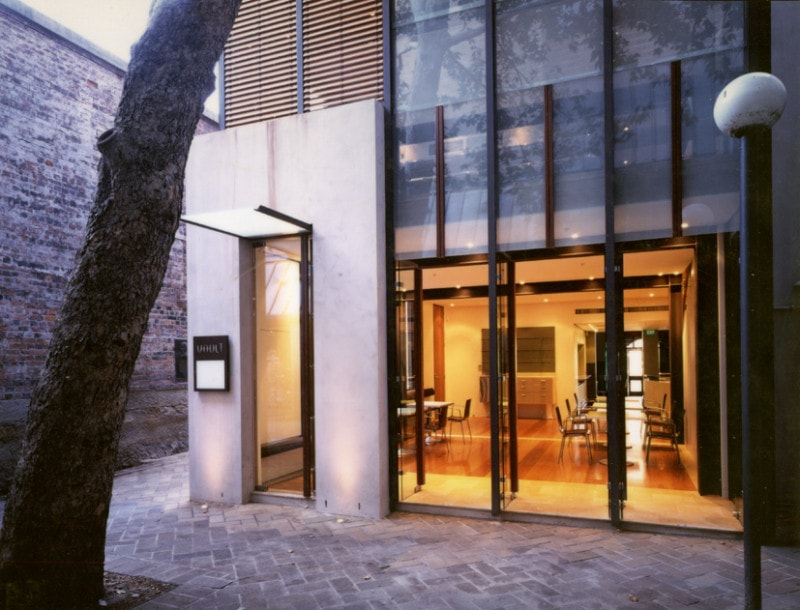
A glass-fronted entry and warm-lit interior sit behind a simple concrete frame, giving the facade a clear contrast between solid and transparent elements. The narrow laneway setting and mature tree help soften the contemporary addition within its historic context.
© Ross Honeysett