Peppertree Villa
Pepping Up Late 1920s Classicism
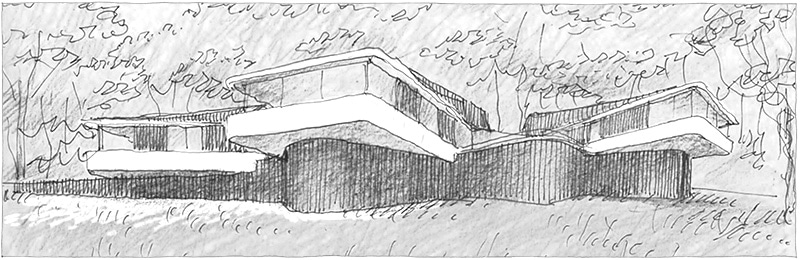
At the summit of Bellevue Hill a centennial Peppertree rises over the skyline; two homes lie beneath its vast canopy. To one side of the fence, The Oculi House and to the other, Peppertree Villa, a skillfully designed late 1920s home.
One day the owners of the two homes met under this tree; they discussed botany and architecture. This was how Luigi Rosselli Architects came to be selected to respectfully revive and refresh this beautifully designed residence.
During the 1920s, while Europe sought to wash away the trauma of World War I through radical architectural styles such as constructivism and cubist inspired modernism, Australia chose to find comfort in the familiarity of classicism. Mediterranean classicism provided the dominant source of inspiration for homes built at ‘the top end of town’. With the Peppertree Villa, this classicism was expressed through a grand entry loggia or portico to the side of the house, and magnificent fireplaces and well-proportioned rooms to its interior.
The aim of the Luigi Rosselli Architects improvements was to provide better flows between the various living spaces, open the spaces up to a new garden, and add a new basement garage, an attic room and a back yard swimming pool.
A new stair was also added due to the necessity to connect the two new levels to the rest of the house, and to provide a more inviting ascension to the bedrooms on the upper floors. The resulting stair takes the form of a suspended sculptural ribbon entirely detached from the walls of the stairwell. Luigi had to jump up and down on the treads to convince both the client and the builder of its strength and stability before they would consent to remove the temporary supporting props.
Every aspect of the design of the house was carefully workshopped by the Client (a renowned fashion designer), Project Architect Jane McNeill and Interior Designer Romaine Alwill. Romaine’s mastery of architectural finishes brought the introduction of lush, tactile elements such as the stucco lucido (polished plaster), brass metalwork, solid timber paneling, resin based wall claddings and bronze finishes to the cabinets.
On the ground floor, small timber windows have been replaced by larger, finely framed steel windows that offer uncluttered openings onto a new Myles Baldwin designed garden where the Peppertree still stands, casting a soft, dappled light across the walls and grounds of this villa reborn.
Location: Bellevue Hill, NSW
Design Architect: Luigi Rosselli
Project Architect: Jane McNeill
Interior Designer: Alwill Interiors Pty Ltd
Builder: KCJ Constructions Pty Ltd
Structural Consultant: Rooney & Bye Pty Ltd
Joiner: Sydney Joinery Pty Ltd
Landscape Designer: Myles Baldwin
Landscaper: Bates Landscape
Windows: Enviro Window Designs
Resin Finishes: Marblo
Stucco Lucido Finishes: Mark Stafford
Photography: Prue Ruscoe


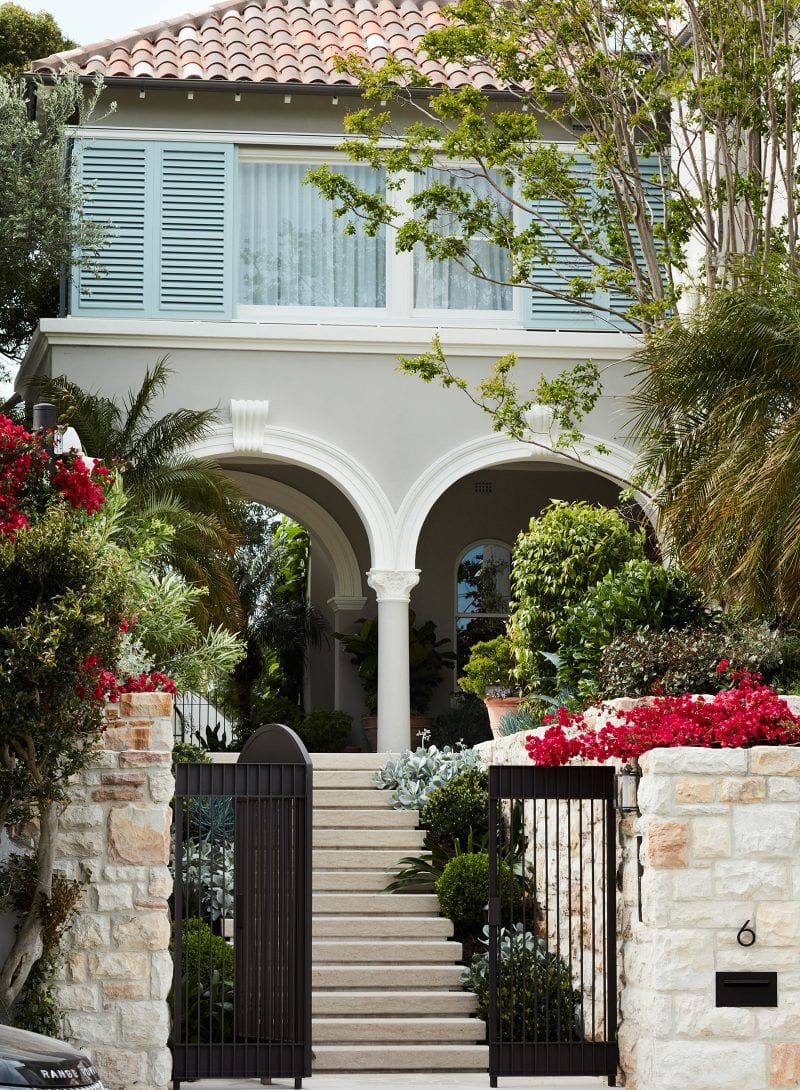
The entrance sequences retains the gravitas of Mediterranean classicism, with sandstone steps rising through a white arch softened by surrounding foliage. The threshold honours the villa's heritage while gently ushering residents into a refreshed and connected home.
© Prue Ruscoe
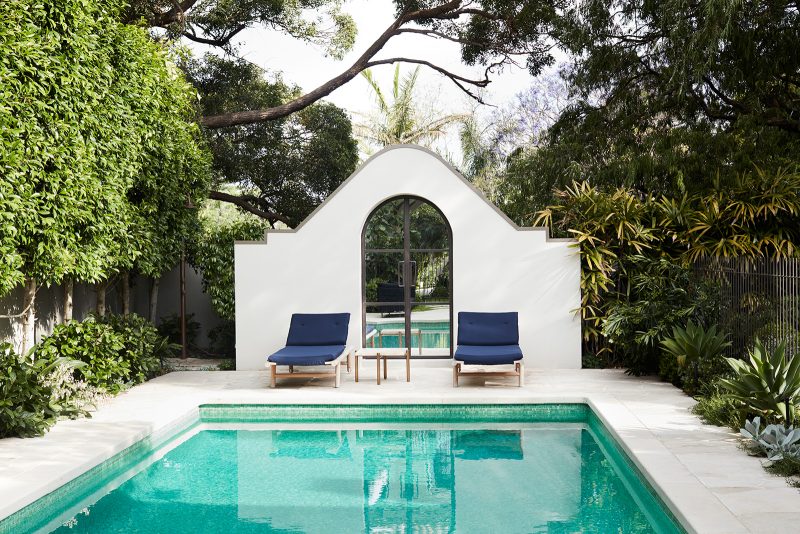
Alongside the house, a serene poolside setting extends classical symmetry into the garden. The seating area framed by greenery and the mirrored reflection of the doorway introduce a subtle play of depth and illusion, reimaging the residence as a spa-like retreat.
© Prue Ruscoe
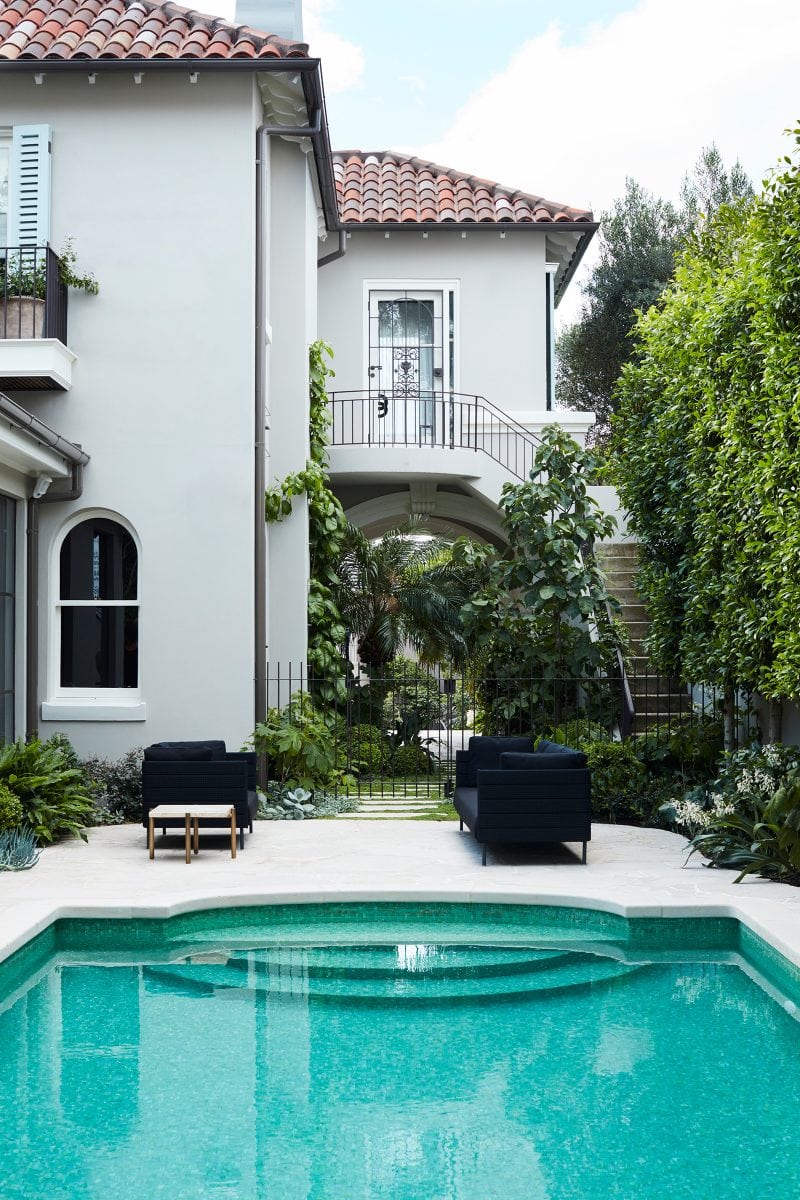
The swimming pool is embedded within dense planting, forming a tranquil focal point within the landscape. Surrounded by greenery, the water reads as a natural extension of the property rather than a discrete intervention.
© Prue Ruscoe
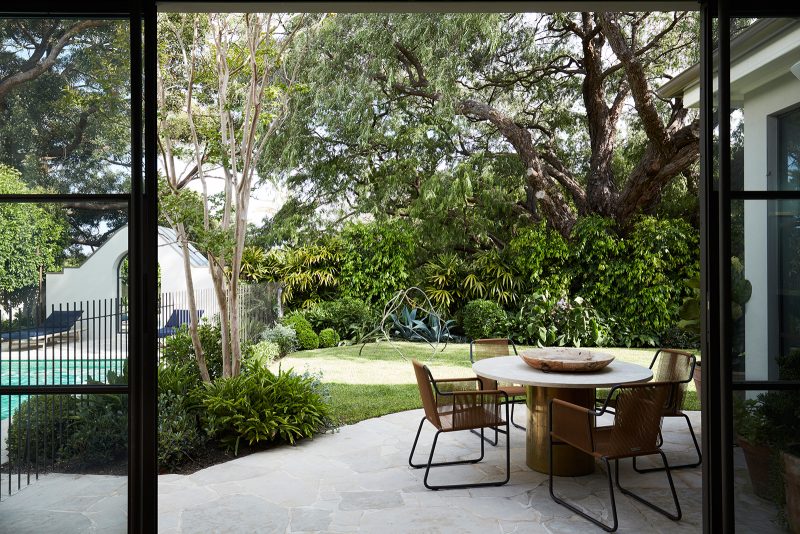
A secluded patio beneath a mature canopy provides an intimate setting for outdoor dining and repose. Simply furnished, the space balances sun, shade, and privacy within a calm, sheltered environment.
© Prue Ruscoe
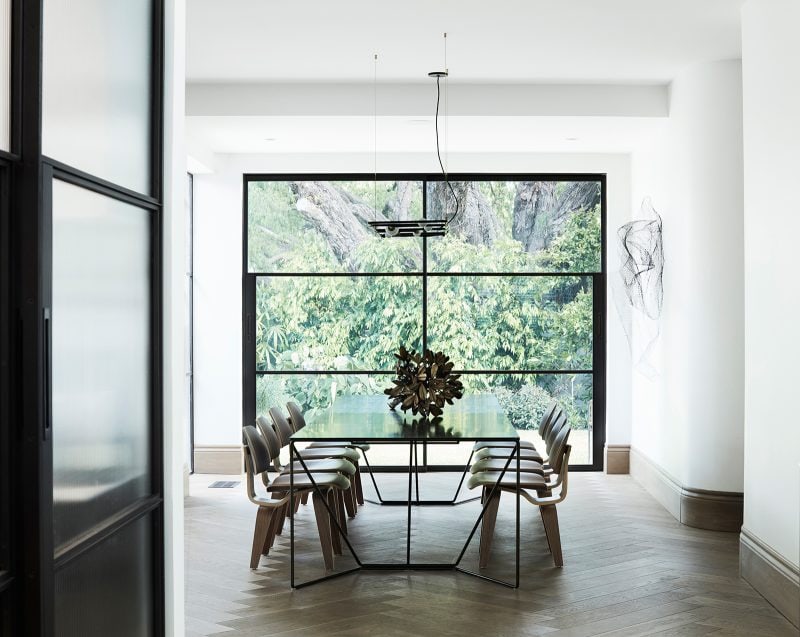
Inside, a generous dining room is flooded with natural light through steel-framed windows, creating a sense of openness and clarity. The scale of the table and chairs responds to the original proportions of the room while supporting modern conviviality.
© Prue Ruscoe
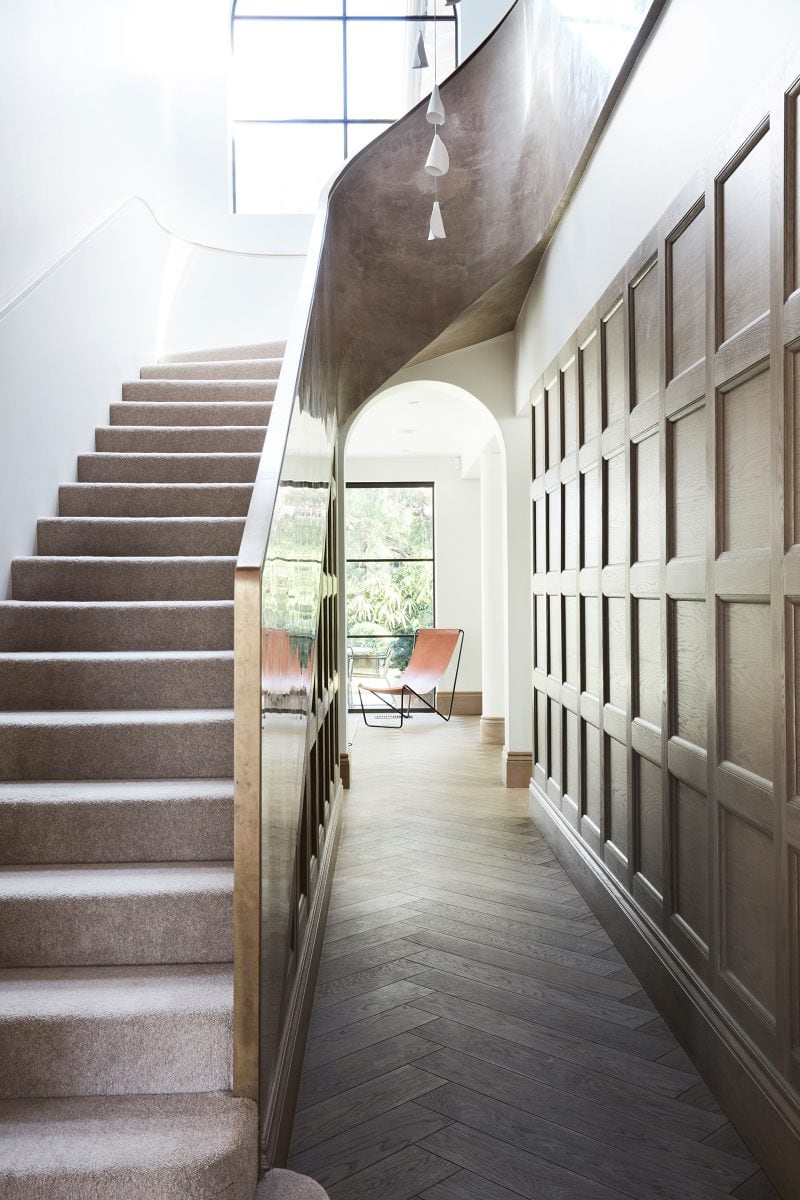
An arched doorway frames the stair hall, where natural light animates ascending steps. The interplay between threshold and transition preserves classical weight while easing movement through the home.
© Prue Ruscoe
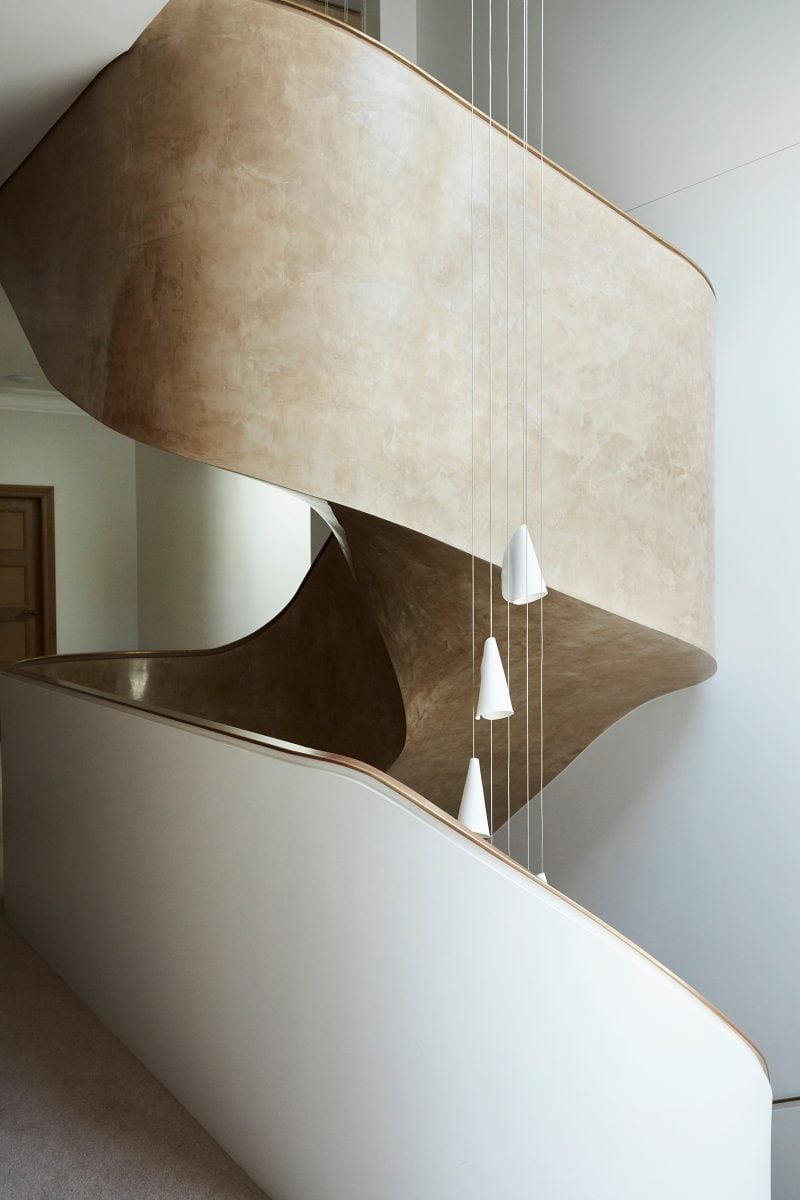
At the core of the house, a suspended spiral staircase rises like a sculptural ribbon, softly illuminated. Its delicate engineering and fluid form define the renewal of the villa.
© Prue Ruscoe
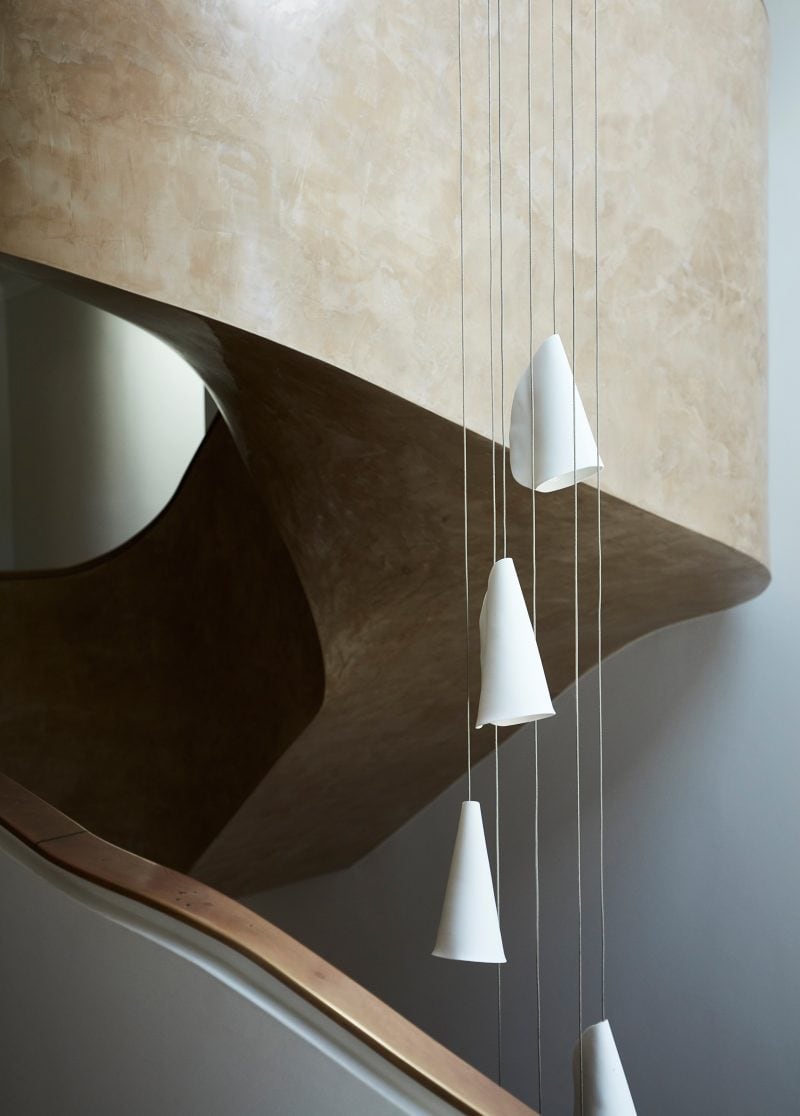
Above the stair, pendant lamps descend in a constellation of softly shaded forms. Their measured arrangement enhances both structure and daily ritual, introducing warmth and rhythm to the vertical space.
© Prue Ruscoe
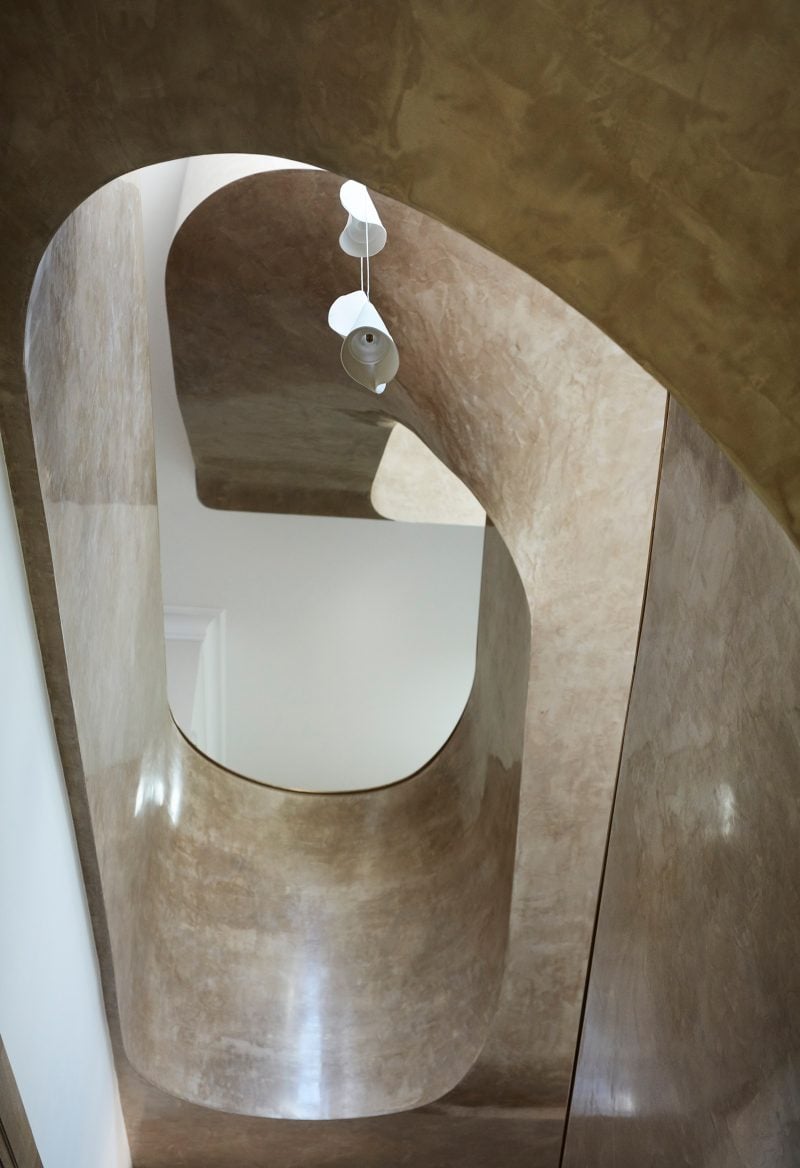
As daylight shifts, the lamps cast reflections across the balustrade, transforming the stairwell into a living lightwell and reinforcing the poetic interplay of structure and atmosphere.
© Prue Ruscoe
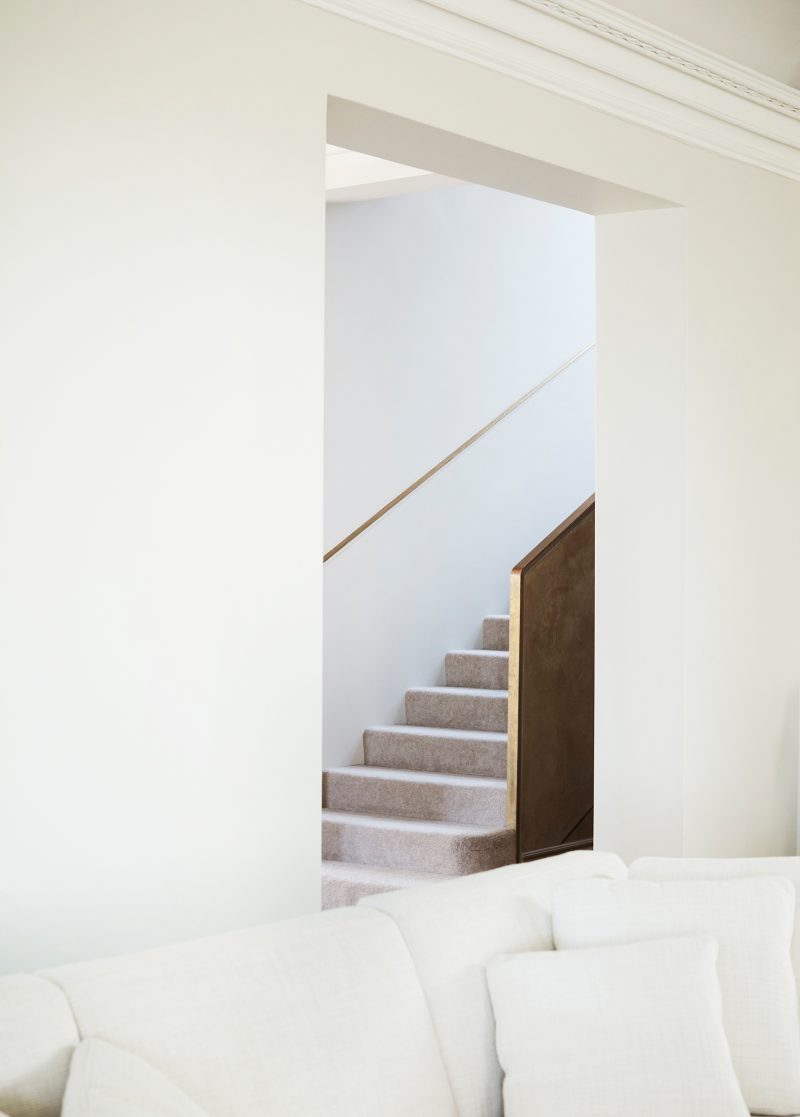
From the living area, white walls and a pale sofa establish a restrained backdrop. A corridor draws the eye toward the stair, where circulation becomes a dialogue between form, light, and movement.
© Prue Ruscoe
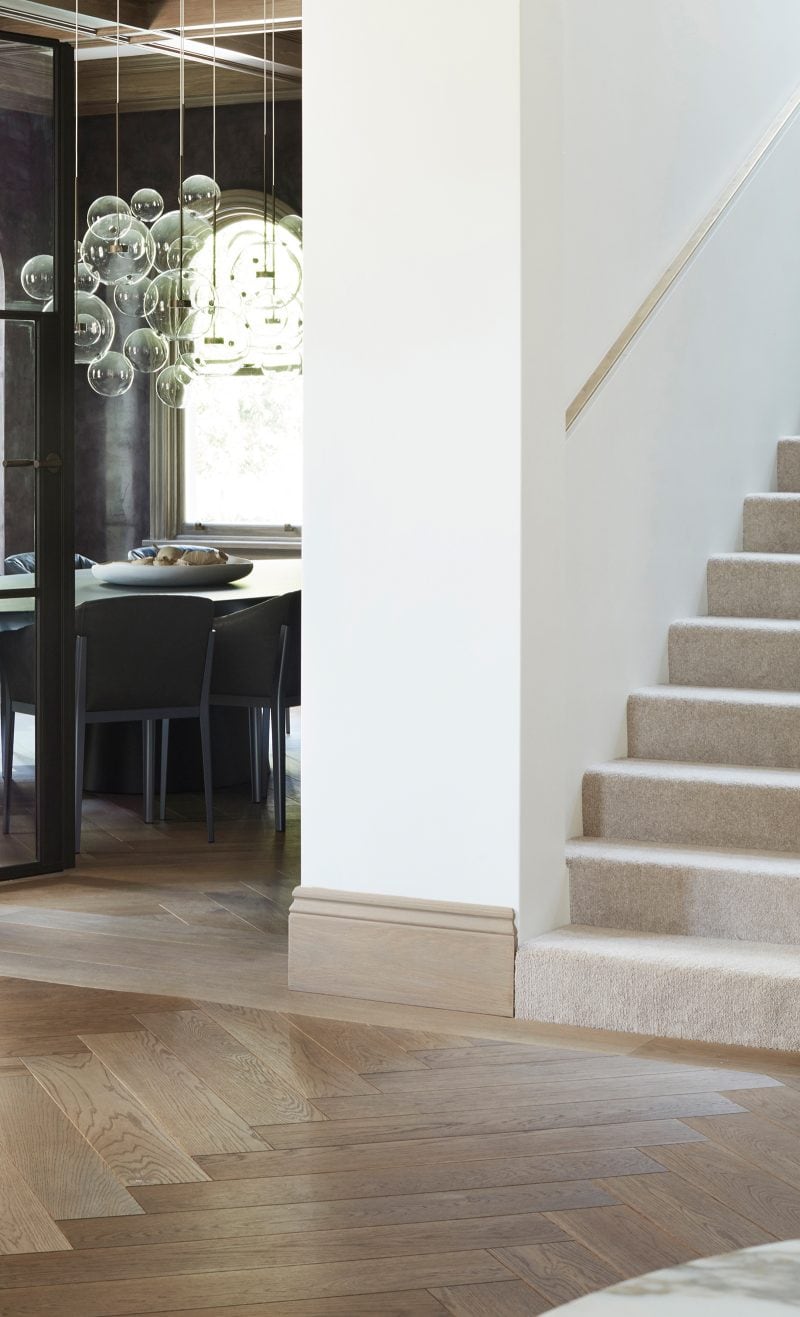
Timber floorboards lead along the hallway toward the formal dining room, their warmth softening the villa's classical rigour. The ascending stair, with its integrated handrail, punctuates the vista and links social spaces with private retreat above.
© Prue Ruscoe
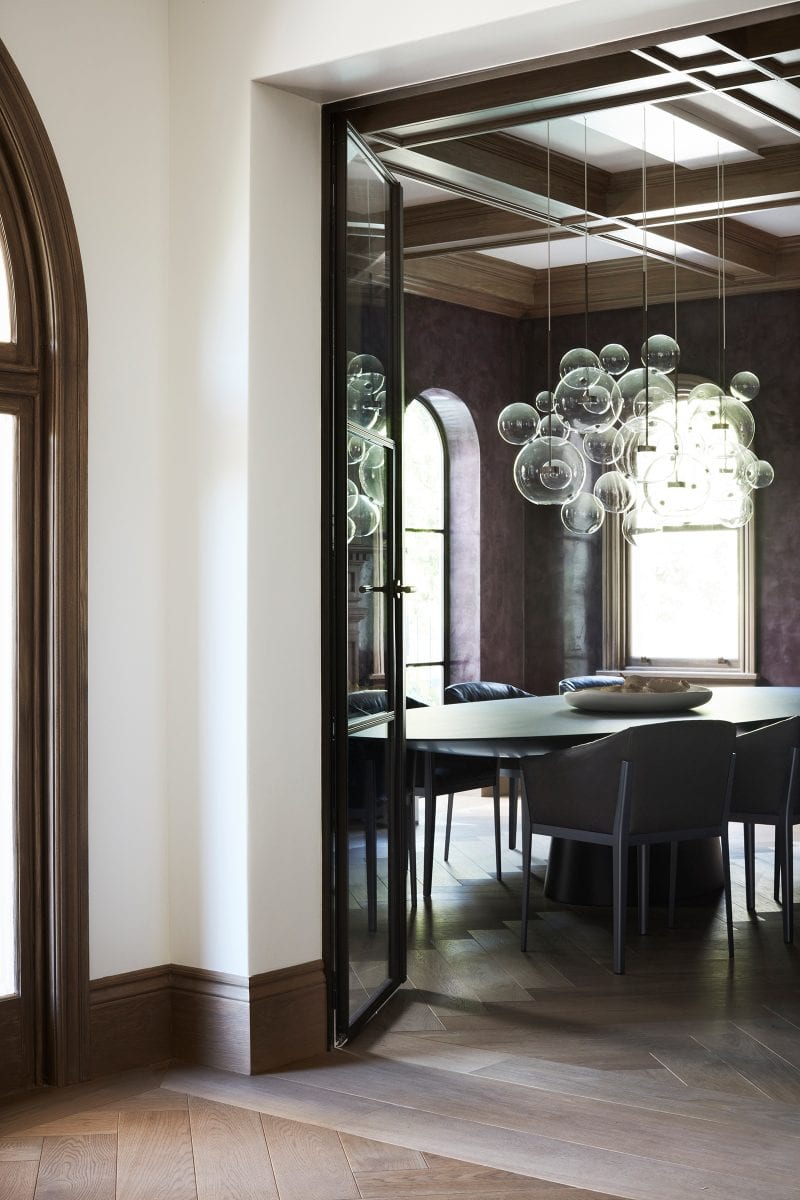
The dining chamber balances classical poise with contemporary comfort. Glazed openings admit generous light, while refined floor detailing and subtle ceiling embellishments create a welcoming atmosphere.
© Prue Ruscoe
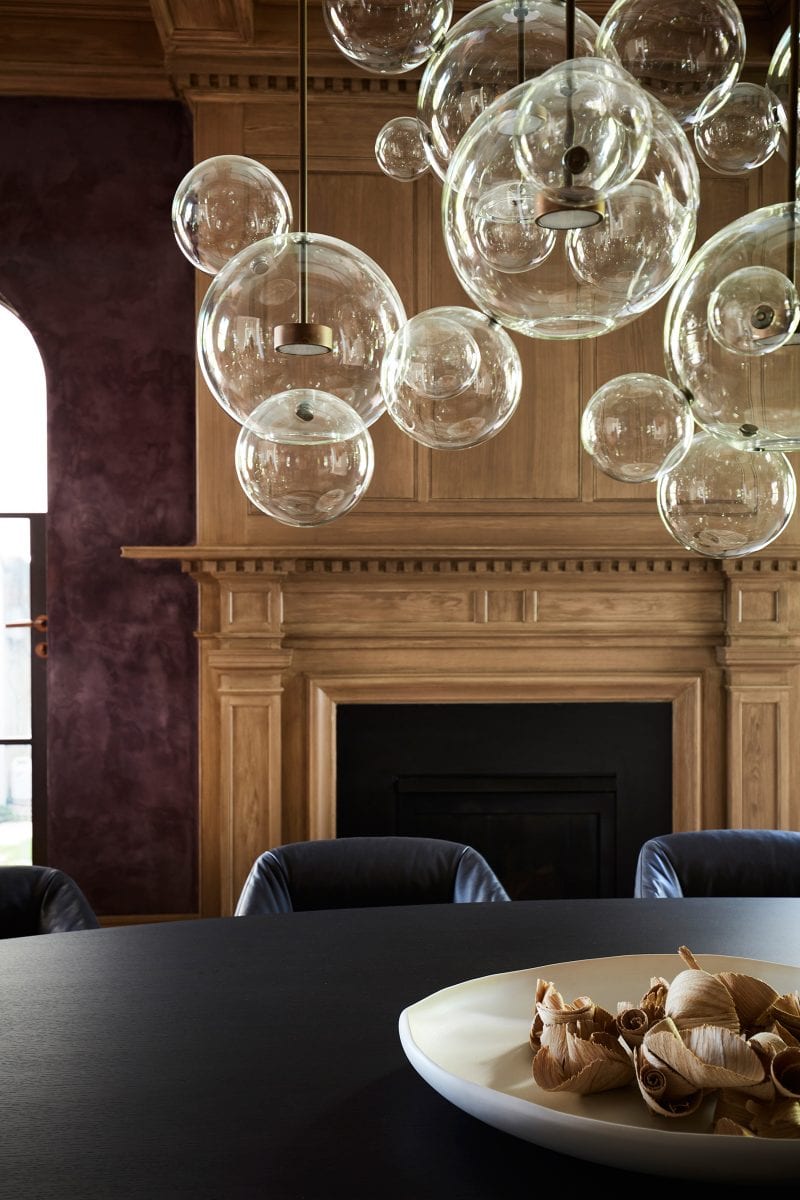
In an adjacent reception room, a chandelier of clustered bulbs introduces modern brilliance within the classical interior. Daylight from tall windows mingles with its glow, softening the fireplace and reinforcing a dialogue between tradition and reinvention.
© Prue Ruscoe
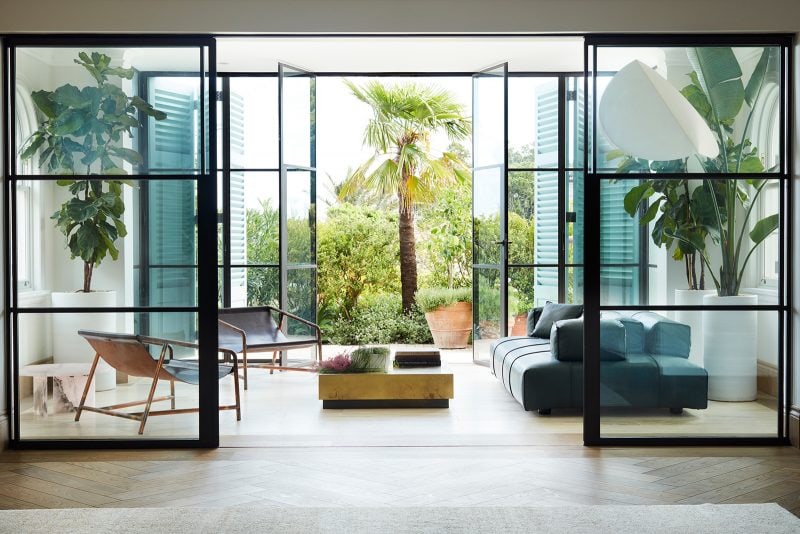
Glass partitions dissolve thresholds between living areas, allowing daylight to flow freely throughout the interior. Spatial clarity is paired with a tactile material palette that unities furnishings and finishes under natural light.
© Prue Ruscoe
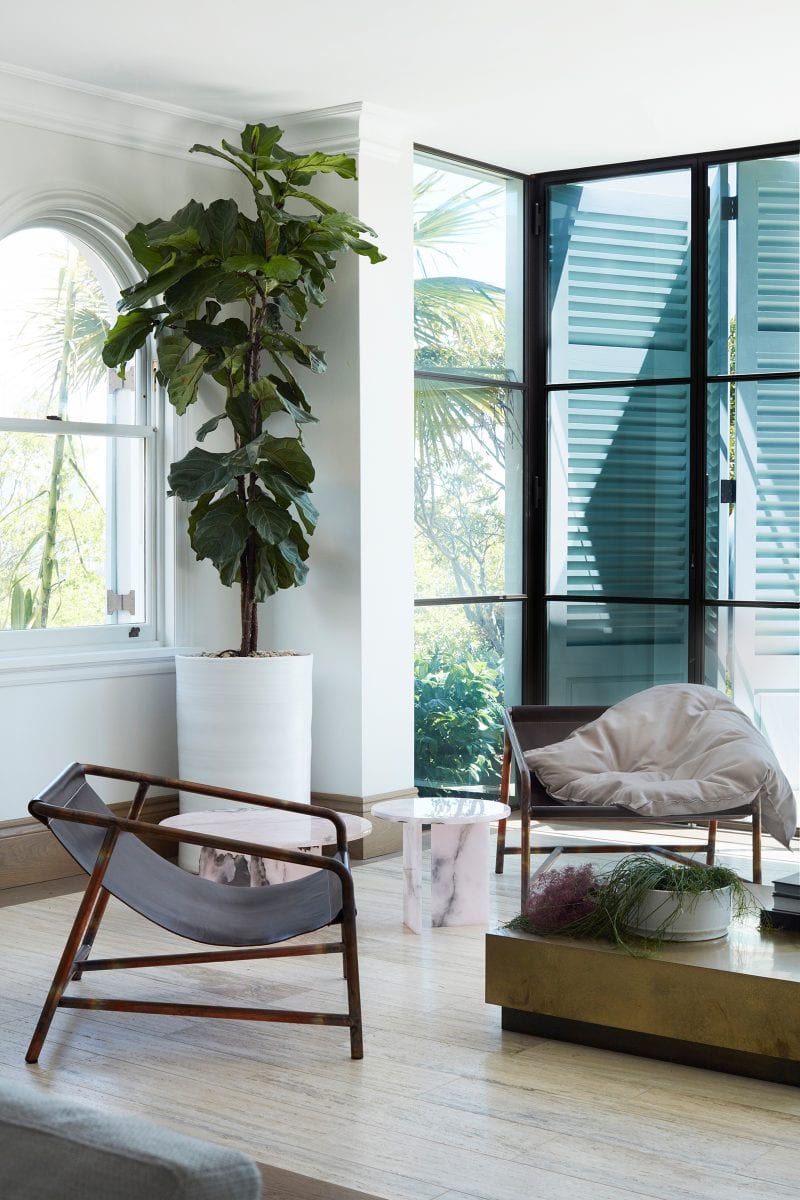
The living area opens to the garden and sky through floor-to-ceiling windows. Layered furnishings, cushions, and botanical elements create an atmosphere that is both elevated and intimate, bridging contemporary living with inherited character.
© Prue Ruscoe
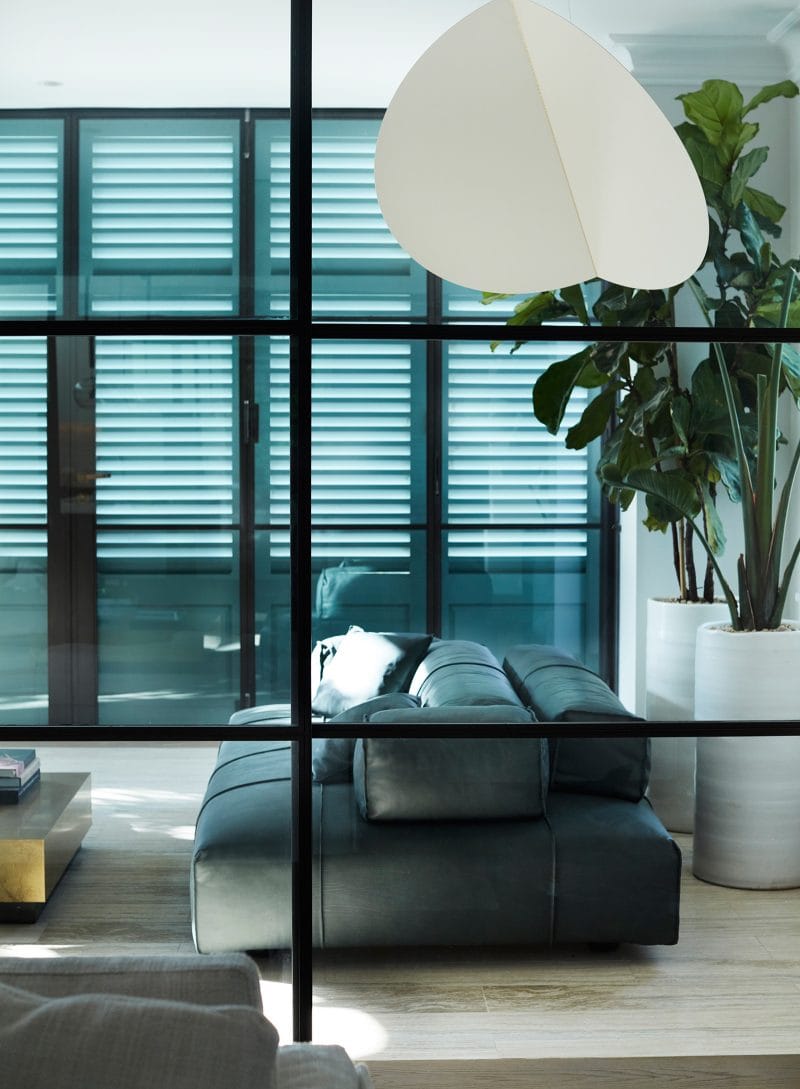
Viewed through sliding glass doors, the living room appears as a sunlit sanctuary. Daylight heightens texture and tone, transforming the once-introspective villa into a home fully engaged with light and landscape.
© Prue Ruscoe
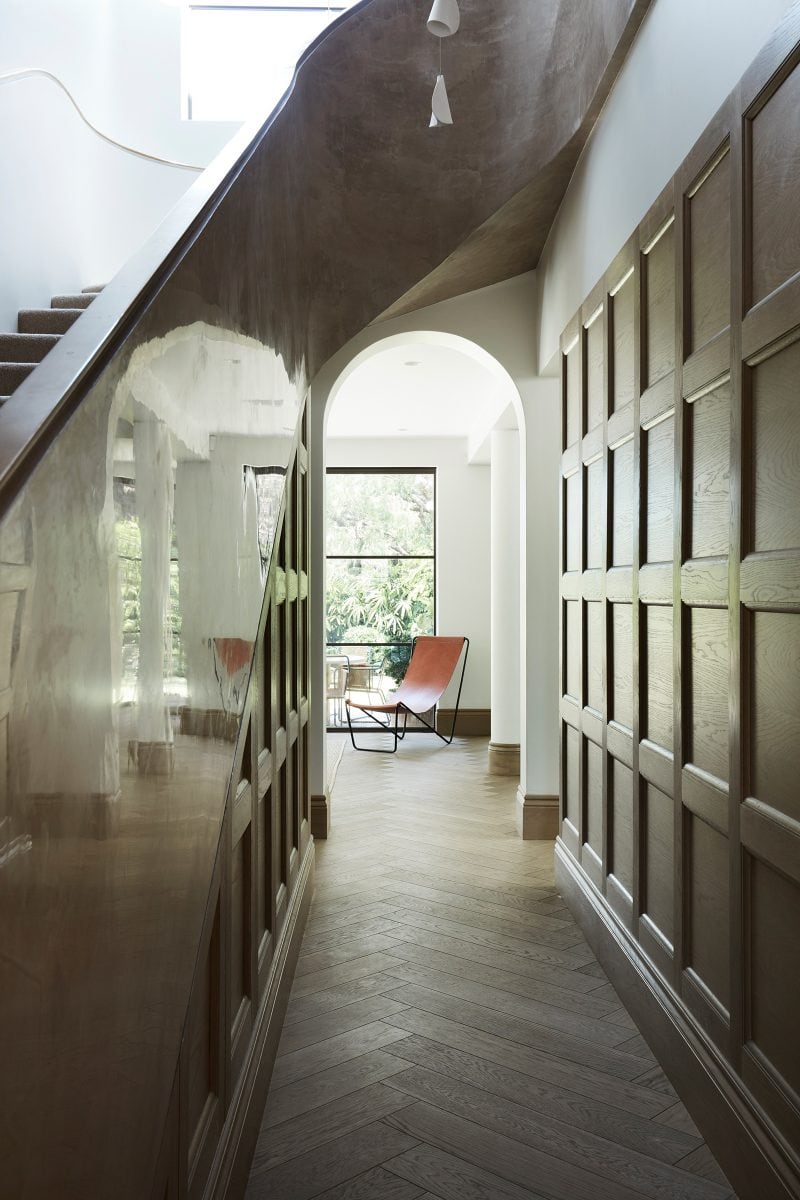
A corridor extends toward an arched passage, where a solitary chair beneath a window captures and disperses natural light. Circulation is composed to feel luminous and contemplative, echoing the villa's classical calm.
© Prue Ruscoe
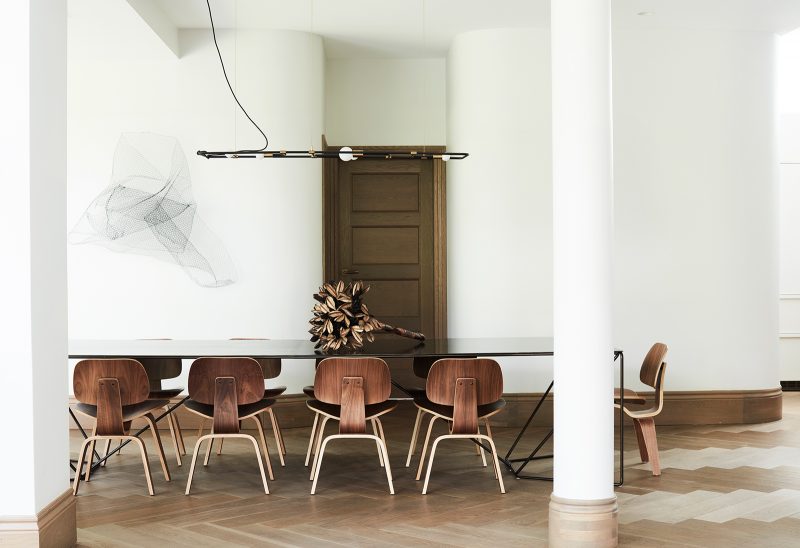
The open-plan dining area features timber flooring and crisp white walls, establishing a minimalist backdrop. The layout balances clarity and comfort for everyday meals, gathering, and quieter moments.
© Prue Ruscoe
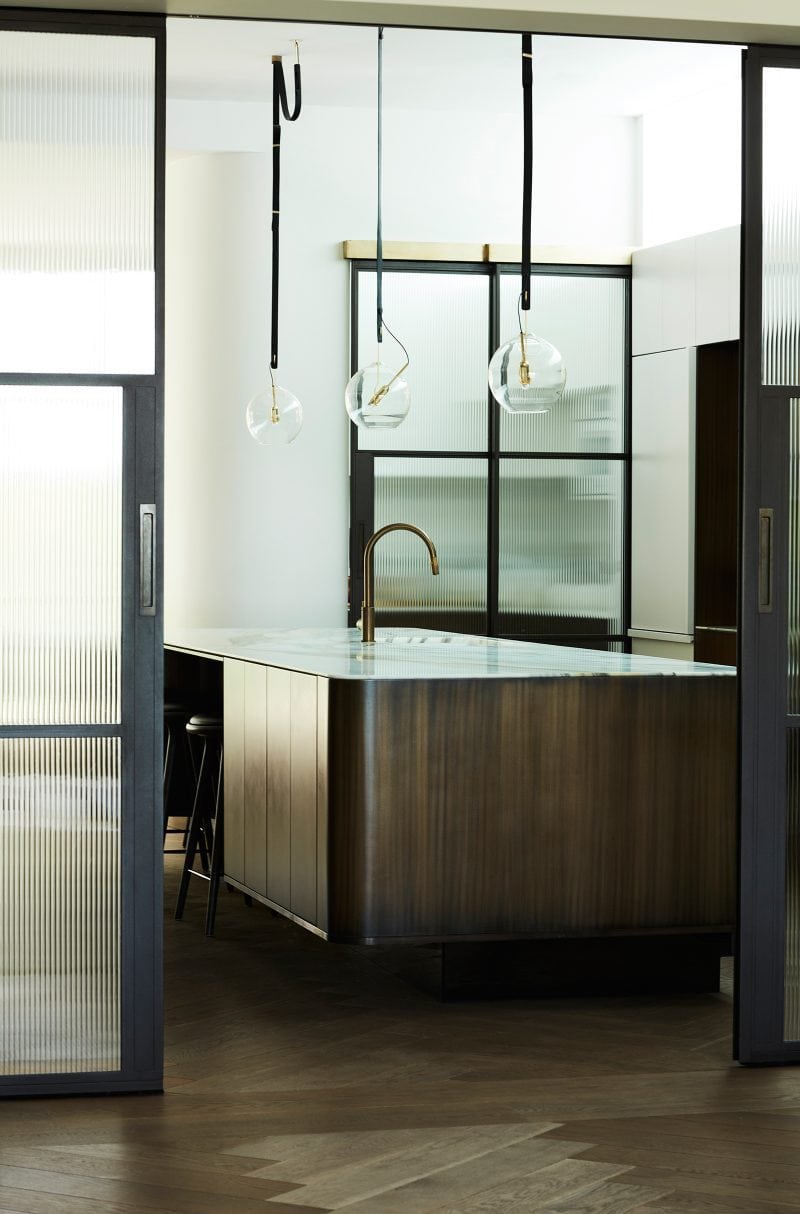
The kitchen integrates glass doors, a central island with inset sink, and bespoke timber joinery with bronze accents. Polished stucco lucido and finely framed steel windows invite soft, dappled garden light into the space.
© Prue Ruscoe
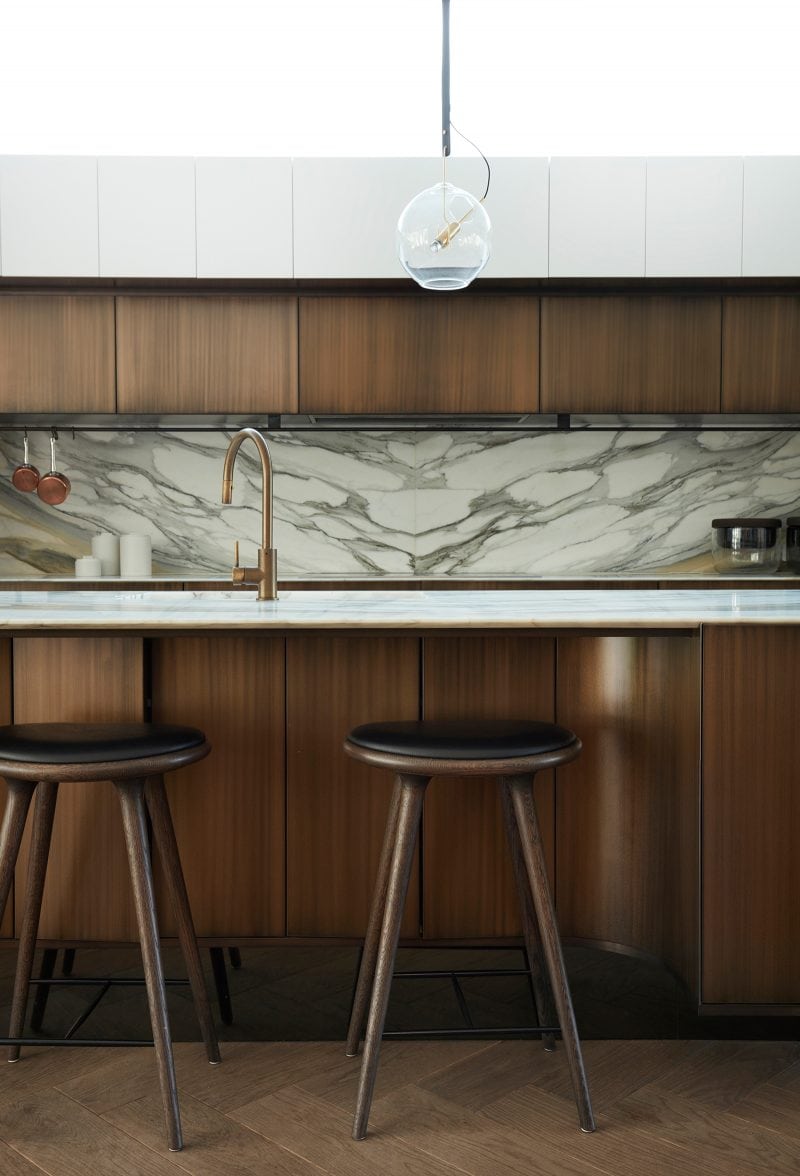
The kitchen's central island, generous in scale and equipped with integrated storage, is complemented by stools that invite informal meals. The design achieves a seamless balance of function and beauty, where every detail supports both usability and visual appeal.
© Prue Ruscoe
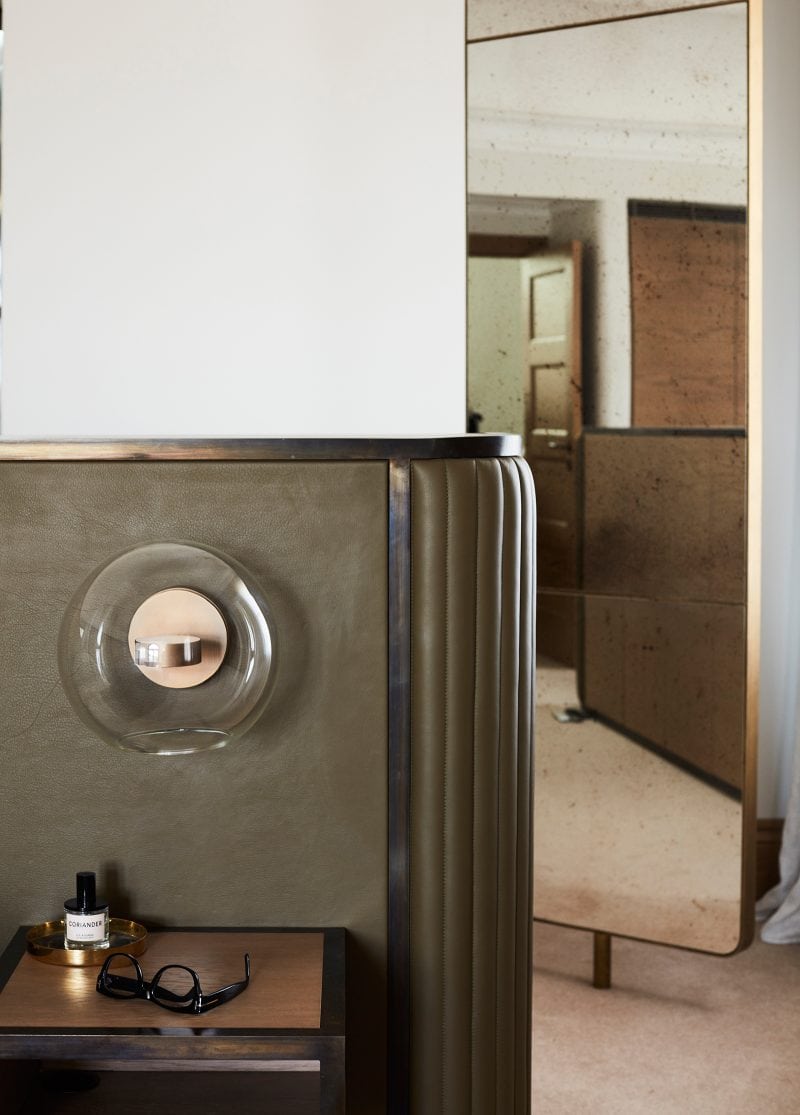
In the bedroom, a mahogany bedside table anchors a wall-mounted lamp, while a gilt-framed mirror above reflects light and creates a sense of depth. This vignette showcases meticulous attention to furnishings and finishes, highlighting the harmony between materiality and composition.
© Prue Ruscoe
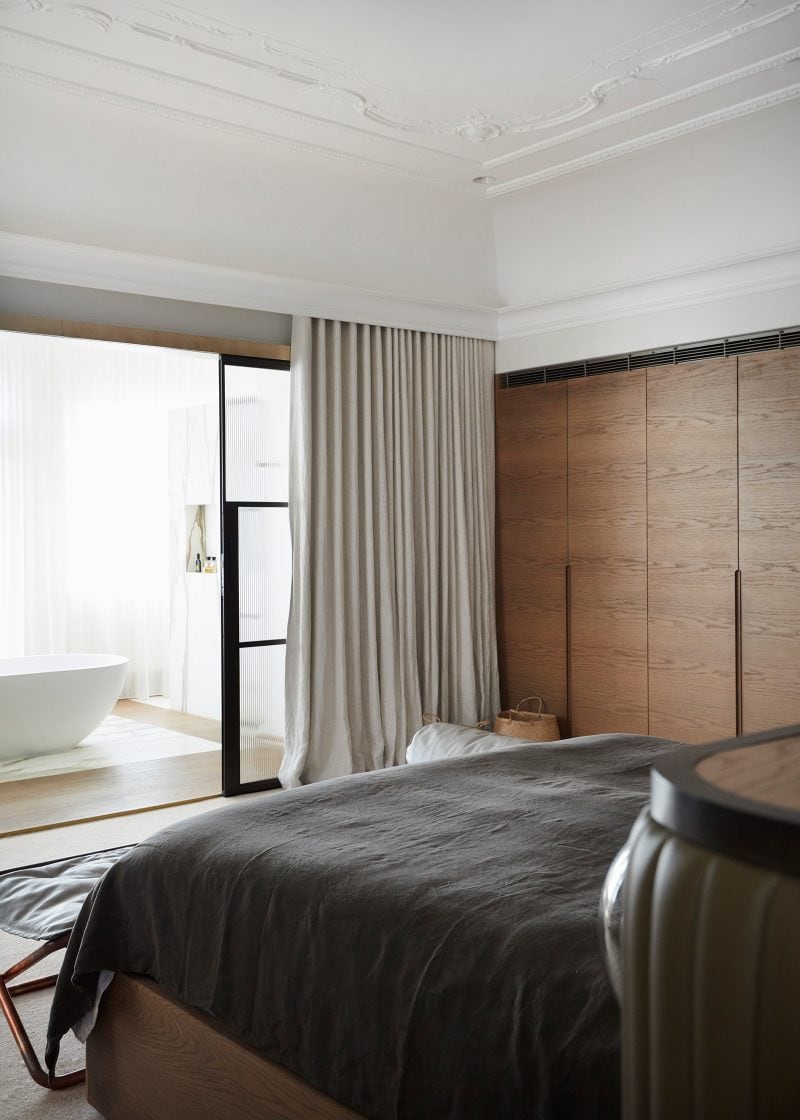
The primary bedroom integrates sleeping and storage areas, with curtains revealing an ensuite sanctuary. A freestanding bathtub harmonises with the surrounding design, extending classical elegance into contemporary living.
© Prue Ruscoe
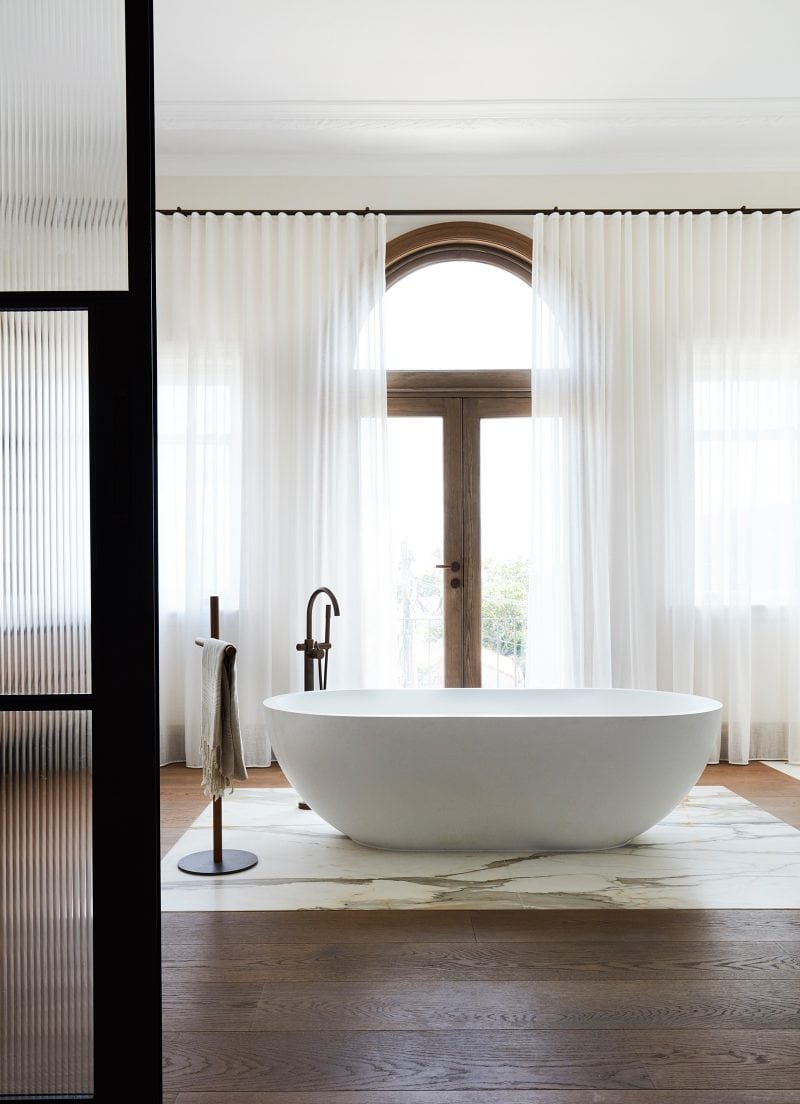
The bathtub is complemented by soft drapery and a warm white-and-brown palette, evoking calm and repose. Every element is considered for visual appeal and functional comfort.
© Prue Ruscoe
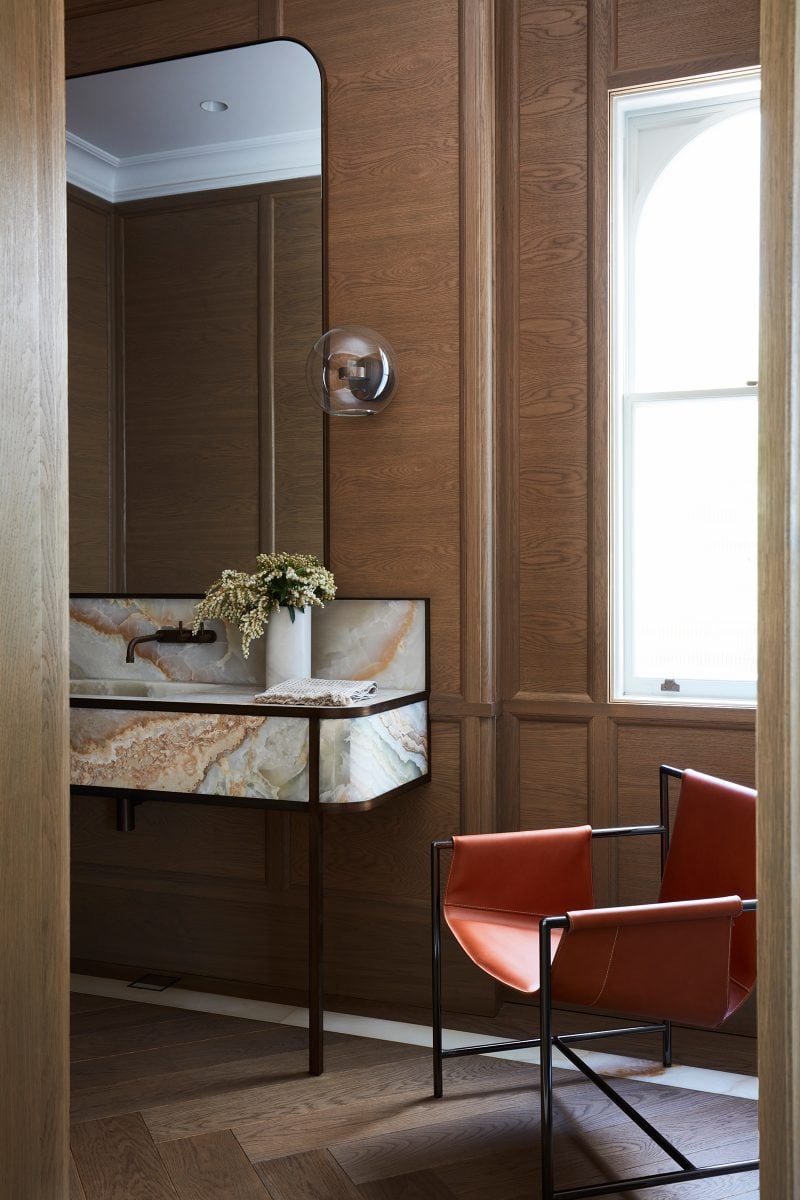
A restrained powder room features a white porcelain basin atop grey marble, with an unframed mirror above. The palette and materials contribute to quiet refinement, merging practicality with elegance.
© Prue Ruscoe
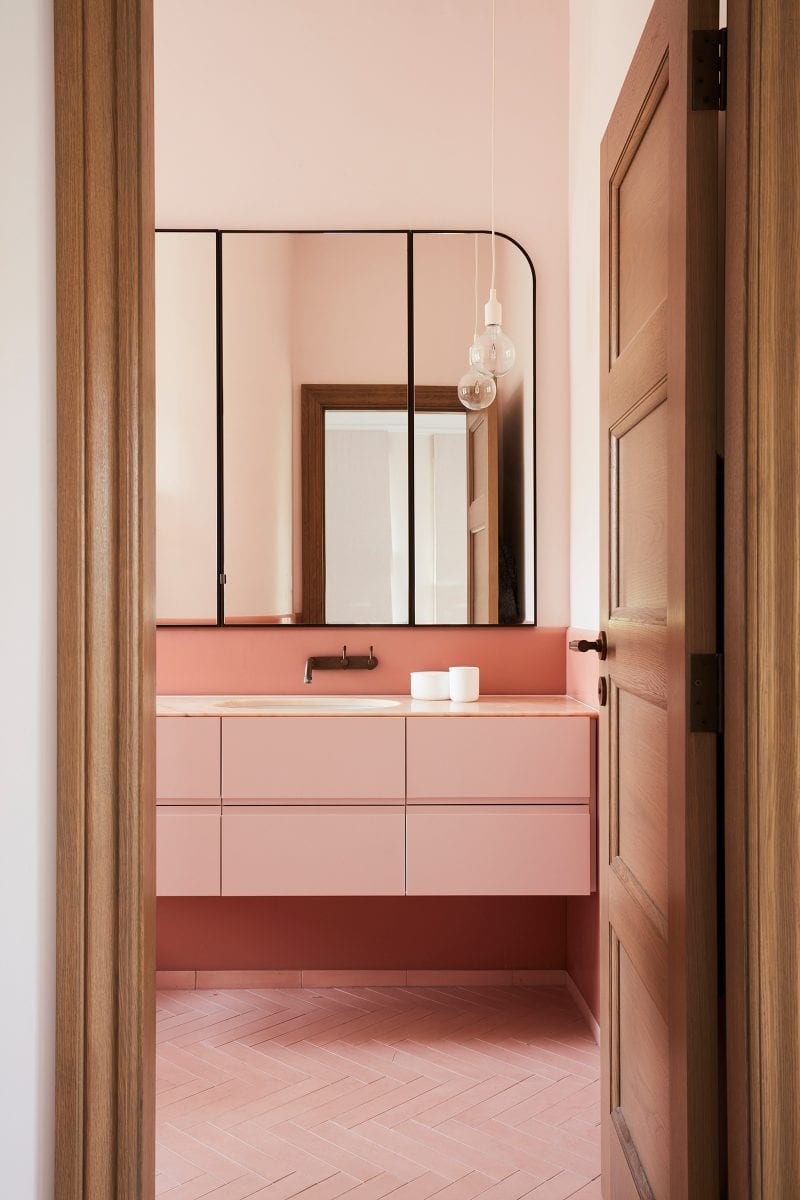
The bathroom's mirror, basin, and tiled floor integrate with cabinetry and fixtures to balance functionality and visual coherence, resulting in a serene, practical, and aesthetically unified space.
© Prue Ruscoe